
2026 Smart Robotics Industry Report
Smart robots are moving from demos to real work, driven by AI, factory demand, falling parts costs, and China’s fast-growing supply chain.
Table of Contents
Current State of the Smart Robotics Industry
Smart robots are leaving the lab.
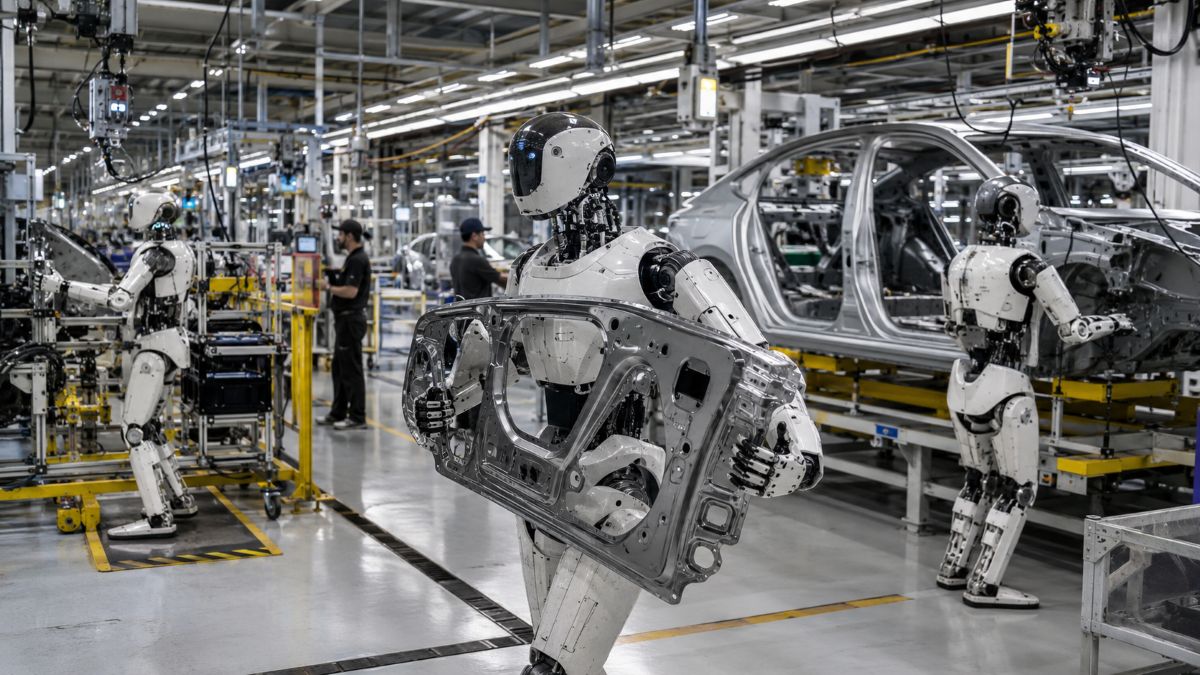
In 2026, the industry is moving from demo videos to factory floors, warehouses, and service sites. This is a major shift. For years, many robots looked exciting on stage but were not ready for daily work.
That is changing.
Tesla Optimus Gen-2, Figure 02, and UBTECH Walker S have entered real factory training. They are learning tasks such as battery sorting, material moving, and assembly support.
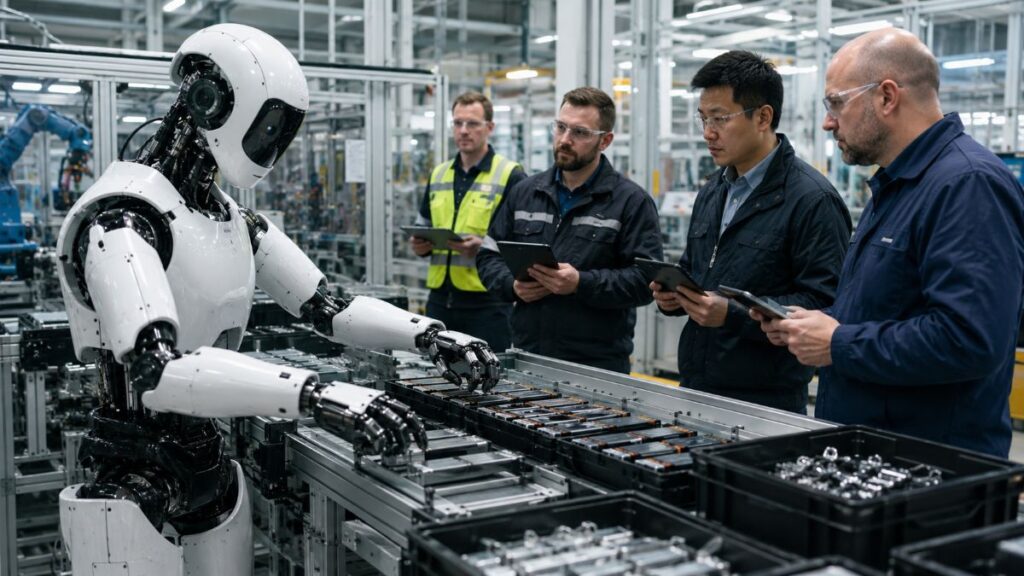
For readers of AX Robots, this is the point to watch: the story is no longer only about “cool machines.” It is now about delivery, cost, reliability, and orders.
In 2025, global humanoid robot shipments were about 18,000 units. That was a sharp rise from the year before. In 2026, shipments are expected to pass 50,000 units.
China’s share is also rising. It moved from about 20% to an expected 30%, helped by a strong supply chain and fast product updates.
Capital is becoming more careful. Investors still like robotics, but they are asking harder questions now.
| Old Focus | New Focus |
|---|---|
| Demo videos | Real orders |
| Technical promise | Factory use |
| Big stories | Revenue proof |
| Sales multiples | Profit potential |
Four forces are pushing the market forward.
First, AI models are making robots better at understanding tasks. A robot can now connect vision, language, and action more smoothly than before.
Second, factories around the world face labor shortages. Automation is becoming a need, not just a choice.
Third, key parts are becoming cheaper as Chinese suppliers grow stronger. The average price of some humanoid robots is moving from around RMB 1 million toward RMB 500,000.
Fourth, policy support is strong. Governments see smart robots as part of future industrial power.
The global market now has three main camps.
The United States, led by Tesla and Figure, is strong in AI and general-purpose robot design.
China, with companies such as UBTECH, Unitree, and AgiBot, has a deep supply chain and fast product update speed.
Japan and Europe, with names such as FANUC and ABB, remain strong in precision parts and industrial know-how.
The value chain looks like a smile.
Upstream core parts make the highest margins, often around 30% to 50%. Midstream robot makers earn less, around 10% to 15%, because assembly is more competitive.
Downstream software, AI, and system integration can earn 20% to 40%.
China’s robot industry is also forming clear regional clusters.
| Region | Main Strength |
|---|---|
| Yangtze River Delta | Robot bodies and core parts |
| Pearl River Delta | Service robots and exports |
| Beijing-Tianjin-Hebei | AI algorithms |
| Chengdu-Chongqing | New manufacturing base |
Policy support is becoming more direct. Beijing and Shanghai have launched strong programs, including scene-based subsidies. Beijing, for example, offers support that can reach RMB 5 million for selected use cases.
Funding has also been large. From 2024 to 2025, global robot financing was about USD 12 billion to USD 15 billion. Most deals were Series A or B rounds.
Big players are entering fast. Tesla, XPeng, Xiaomi, Alibaba, and Tencent are all moving into the field in different ways.
But the industry has a clear tension.
Demand is rising fast. Supply is not ready enough.
Robot makers want to build more units. Yet precision reducers, screws, sensors, and other key parts still face yield and capacity problems.
This creates longer delivery times and higher costs.
That gap may decide who wins in the next few years.
Deep Dive into the Smart Robotics Supply Chain
The smart robot supply chain is not equal.
Some parts of it earn strong profits. Others work hard for thin margins. This is why investors often look beyond the robot brand and study the parts inside.
The upstream layer is the most valuable today. It includes reducers, motors, screws, sensors, controllers, batteries, and structural parts.
These components decide how strong, accurate, smooth, and safe a robot can be.
The midstream layer builds the robot body. This part is important, but it often has lower margins because many companies can do assembly once the design is mature.
The downstream layer includes system integration, AI software, data services, and maintenance.
This layer becomes more valuable as robots enter real work sites.
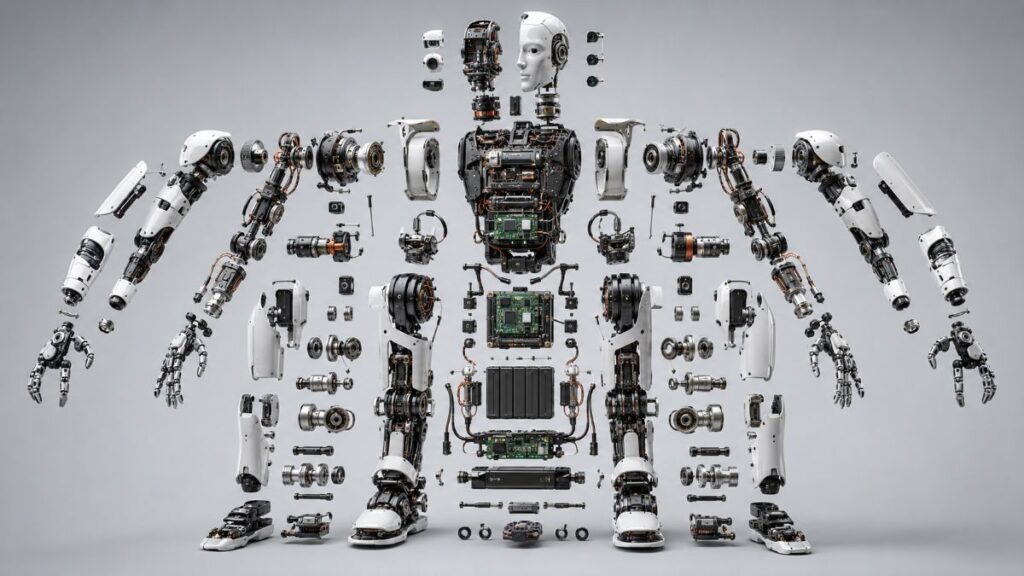
A simple view of value looks like this:
| Supply Chain Layer | Main Role | Estimated Margin |
|---|---|---|
| Upstream parts | Performance ceiling | 30%–50% |
| Robot body | Assembly and scale | 10%–15% |
| Software and integration | Real-world use | 20%–40% |
For humanoid robots, parts are the biggest cost.
In 2026, the average humanoid robot price is expected to be around RMB 350,000. Core parts may account for more than 60% of the bill of materials, or about RMB 210,000.
The cost split is roughly:
| Component | Cost Share |
|---|---|
| Reducers | 21% |
| Motors | 19% |
| Screws | 19% |
| Sensors | 14% |
| Controllers | 12% |
| Structural parts | 10% |
| Batteries | 4% |
One of the hardest parts is the planetary roller screw.
It converts rotating motion into straight-line motion. For humanoid robots, this matters because legs, arms, and joints need strong and precise movement.
Tesla Optimus and Figure-type robots use this kind of technology in key motion systems.
The bottlenecks are not simple.
High-precision thread grinding machines and testing tools still depend heavily on imports. Processing skills are also hard to copy.
Heat treatment, thread grinding, and assembly consistency all need years of learning.
Materials are another issue. Domestic bearing steel still has gaps in purity and uniformity. That affects fatigue life when parts face repeated force.
The current gap is clear.
Domestic lead accuracy may lag by two to three grades. Load capacity can be about one-third lower. Product life may be 25% to 50% shorter.
Yield is also a problem. Domestic yield can be around 60% to 70%, while leading overseas suppliers may reach 85% to 90%.
Mass production is the biggest challenge.
Some domestic lines can produce 10,000 to 20,000 units per month. Overseas leaders can exceed 100,000.
The likely breakthrough window is 2027 to 2028, when yields may pass 80% and batch supply becomes more stable.
The second important bottleneck is the six-axis force sensor.
This sensor measures three directions of force and three directions of torque. A humanoid robot may need four to six of them, often in the wrists and ankles.
It helps the robot “feel” pressure. Without it, precise assembly and soft contact are much harder.
The main problems are elastic materials, strain-gauge bonding, and temperature compensation algorithms.
Domestic sensors are cheaper, usually around RMB 4,000 to RMB 10,000. Overseas sensors may cost RMB 12,000 to RMB 30,000.
But accuracy still differs. Domestic products often reach about ±1.5% to ±2.5% FS. Overseas products can reach about ±0.5% FS.
The third bottleneck is the RV reducer.
RV reducers are used in heavy-load joints, such as the base and big arm of industrial robots. They are harder to make than harmonic reducers.
Nabtesco and Sumitomo still hold a large global share.
Chinese firms such as Shuanghuan Driveline and Qinchuan Machine Tool have made progress in mid- and low-end industrial robots.
High-end, heavy-load, high-precision fields still rely on imports.
This is why AX Robots sees the parts layer as one of the most important stories in the next cycle. Robot brands get the headlines. Parts suppliers may decide the delivery speed.
The supply chain problem can be stated simply:
Downstream demand is exploding. Upstream capacity is not keeping up.
There are four possible paths forward.
| Path | What It Means |
|---|---|
| Materials | Better bearing steel and engineering plastics |
| Process | Better grinding, testing, and heat treatment |
| Capacity | Expansion by leading and second-tier suppliers |
| Ecosystem | Joint development between robot makers and parts firms |
Longer term, value may move from hardware to software and services.
In 2024, parts may account for about 60% of value, robot bodies 25%, and software services 15%.
By 2030, parts may fall to 40% as local supply improves. Robot body margins may shrink.
AI algorithms, data services, and maintenance could rise toward 40%.
That means the future robot business may look less like selling machines and more like running intelligent labor systems.
Smart Robotics Technology Roadmap
Smart robot technology is also changing.
For years, most robots used a layered architecture. The robot had separate systems for seeing, thinking, deciding, and moving.
This design is easy to explain and easier to control. That is why it remains popular in factories in 2026.
UBTECH Walker robots use this type of approach. It works well in structured spaces, where tasks are clear and safety matters.
But layered systems have limits.
Information can be lost between modules. The robot may do well in one setting but fail when the environment changes.
A new path is end-to-end learning.
In this model, a large AI system maps vision, language, and other inputs directly into actions. It can learn more flexibly and may handle new tasks better.
Tesla, Figure, and AgiBot are all exploring this direction.
The risk is control. End-to-end systems can be harder to explain. In a factory, that matters. A robot must be safe, repeatable, and predictable.
So 2026 is a transition year.
Layered systems are still the main choice for industrial use. End-to-end systems are being tested for broader and more flexible tasks.
Embodied intelligence is the deeper change.
This means the robot’s “brain” and “body” learn together. The robot does not just receive commands.
It uses movement, touch, vision, and feedback to understand the world.
World models are part of this shift.
A world model helps a robot predict what may happen next. If it pushes a box, will the box slide, tip, or stay still? If a part is blocked, what should it try next?
In 2026, world models are developing through several paths, including video prediction, interaction learning, and physical simulation.
The hard part is cause and effect.
Robots still struggle to understand why something happens, not just what appears on camera.
Multimodal sensing is another key trend.
Robots are combining vision, touch, hearing, and body-position data. Vision-language-action models are rising quickly.
In simple grasping tasks, success rates can reach more than 90%. In complex tasks, the rate may fall to 60% to 70%.
That gap shows the real challenge.
Picking up a cup is one thing. Handling soft, shiny, moving, or crowded objects is much harder.
Motion control is also improving.
Robots have moved from “can it walk?” to “can it move well under stress?”
Biped walking now often uses hybrid methods, such as ZMP plus reinforcement learning. This helps robots stay stable while adapting to changes.
Unitree H1 has shown running speeds around 3.3 meters per second. Boston Dynamics Atlas has shown extreme motion skills such as backflips.
But agile movement is not the same as useful work.
Dexterous manipulation remains a major bottleneck. A hand must sense pressure, grip objects, adjust force, and avoid damage.
Humans do this without thinking. Robots do not.
Tactile sensing and force control still lag far behind human ability.
Vision-based tactile sensors are promising. They watch how a soft material deforms when touched, then turn that into touch data.
The problems are durability and real-time response.
Factory work is rough. Sensors must survive dust, impact, heat, and long hours.
Looking ahead, 2028 may be the year when end-to-end AI becomes common in high-end robots.
By 2030, robot “brains” may handle more than 80% of tasks in structured environments. Home use may also become technically ready, though cost and safety will still matter.
Smart Robotics Market Forecast, 2026–2035
The market outlook is large, but it should not be read as a straight line.
Robotics grows in waves. First comes factory testing. Then small orders. Then repeat orders. Then mass deployment.
From 2026 to 2030, the global smart robot market is expected to grow quickly, with a compound annual growth rate of about 28.7%.
From 2030 to 2035, growth may slow but stay strong, with a compound annual growth rate of about 18.5%.
By 2035, the global market could pass USD 2 trillion.
Humanoid robots may become the largest new growth engine.
In 2026, humanoid robots may represent about USD 13 billion, or roughly 5% of the market.
By 2030, that could rise to USD 120 billion, or about 18%.
By 2035, the humanoid market may reach USD 500 billion and account for about 25% of the total smart robot market.
Industrial robots will keep growing, likely around 15% to 20% per year. Their share may fall, but only because humanoid robots are growing faster.
Service robots should grow steadily in hospitals, hotels, homes, and public spaces.
Special robots may grow faster in selected fields, including power inspection, firefighting, emergency rescue, and space exploration.
A simple market view:
| Segment | 2026 Position | 2035 Outlook |
|---|---|---|
| Humanoid robots | Small but fast | Largest new growth source |
| Industrial robots | Mature and steady | Still important |
| Service robots | Broad use cases | Stable growth |
| Special robots | Niche but needed | Faster in high-risk tasks |
China may be the biggest growth market for humanoid robots.
From 2026 to 2030, China’s humanoid robot shipments may grow at a compound rate of about 85%.
Market size may rise from RMB 9 billion to RMB 240 billion.
From 2030 to 2035, growth may slow to about 35%, but the base will be much larger.
By 2035, China’s humanoid robot market may reach RMB 1.35 trillion.
This forecast depends on several conditions.
Costs must fall. Parts supply must improve. Safety rules must become clearer. Factories must prove that robots can work for long hours without constant human help.
The winners will likely share three traits.
They will control key parts or have deep supplier ties. They will collect real work data from factories and service sites. They will turn robots from single machines into repeatable systems.
That is the next test for the smart robot industry.
The machines have learned to walk. Now they must learn to work.
 What Is a Robot Marathon Really Testing?
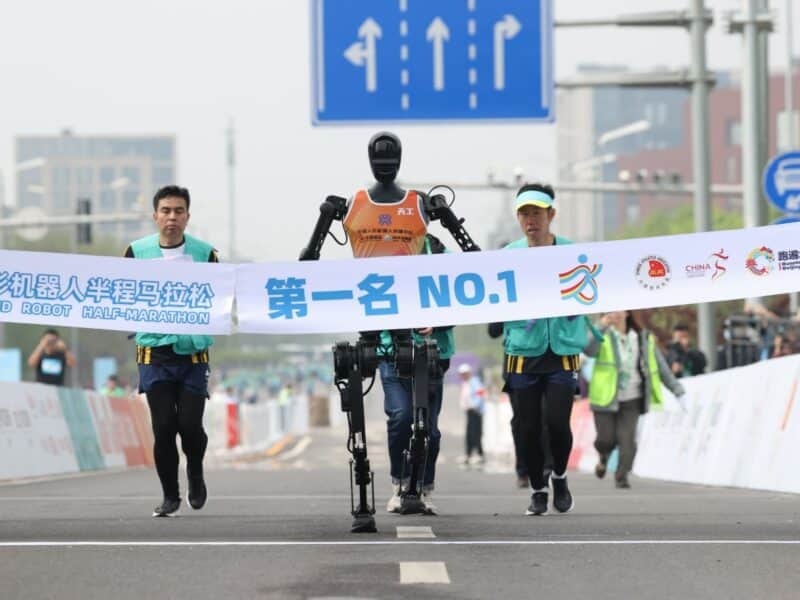 What Is the Meaning of Humanoid Robots Running a Marathon?
 Servo Motors Explained and Why They’re Useful in Robotics
 The Importance of Harmonic Drive Technologies in Modern Robotics