
Are Robots Taking Jobs? Amazon Hits 1 Million!
Amazon’s 1 million robots raise a sharp question: are warehouse robots helping workers, or quietly taking their jobs?
Table of Contents
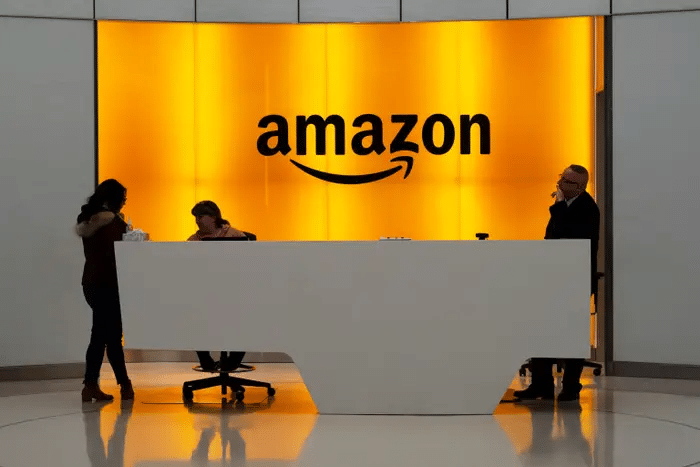
Amazon Just Set a New Record
I still remember the first time I saw a warehouse robot video. A small orange machine slid under a tall shelf, lifted it like it was no big deal, and drove away. No face. No voice. Just quiet speed.
Now Amazon has crossed a huge line: it says it has deployed its 1 millionth warehouse robot. The newest one went to a fulfillment center in Japan. After about 13 years of using robots in warehouses, Amazon’s robot count is now getting close to its human warehouse workforce.
That number made me stop scrolling.
One million robots is not a science fiction army. It is real machines moving real packages, every day.
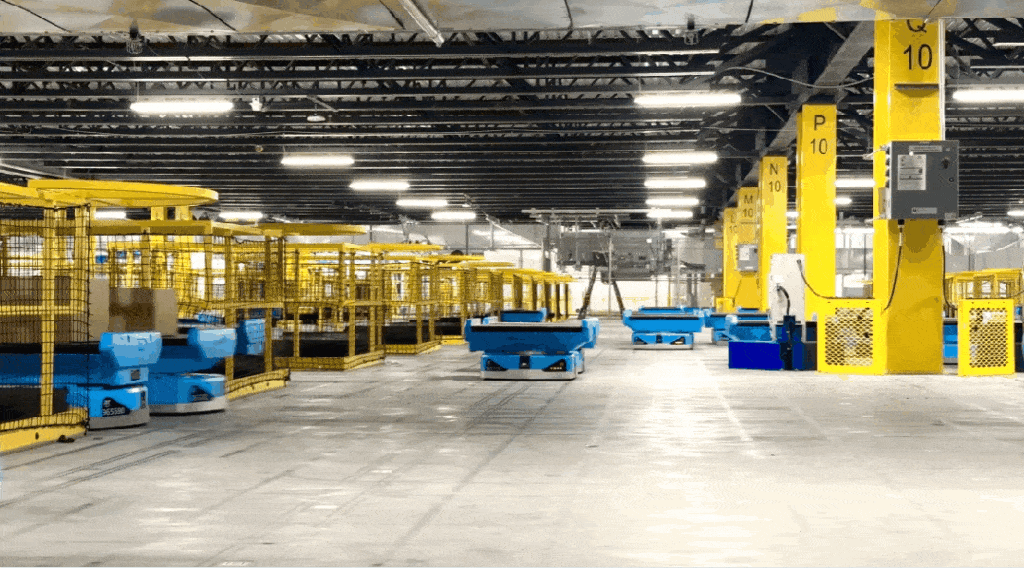
Walk into a modern Amazon warehouse and the scene feels almost like a busy airport. Robotic arms pick items from shelves. Small wheeled robots glide across the floor. Conveyor belts hum. Packages slide, turn, scan, and disappear into the next station.
In one corner, a worker may check an order on a screen. A few feet away, a robot brings the right shelf to them. The worker does not have to run across the building. The shelf comes closer instead.
Amazon says robots now help with about 75% of its global deliveries. That does not mean robots do everything. But it does mean they touch a huge part of the journey from warehouse shelf to front door.
Amazon also introduced DeepFleet, a generative AI model that helps robots move smarter inside warehouses. Think of it like a traffic coach for robots. It helps them avoid slow paths, reduce jams, and move goods faster. Amazon says DeepFleet can improve robot travel efficiency by 10%.
At AX Robots, I often look at stories like this and ask a simple question: is this just about faster shipping, or is it also about the future of work?
The honest answer is: both.
The New Warehouse Robot Called Vulcan
The robot that caught my attention most is called Vulcan.
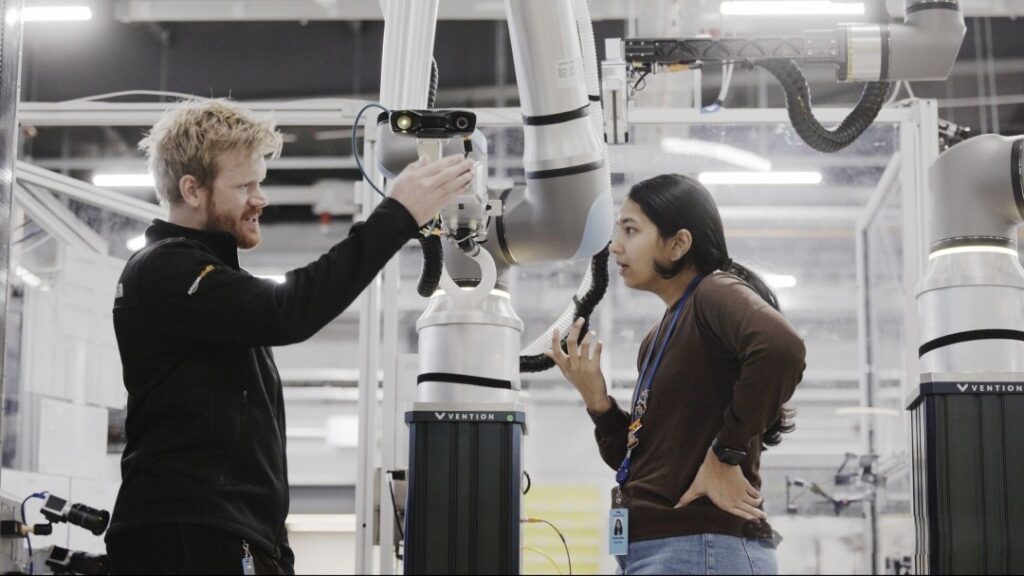
Amazon introduced Vulcan in May 2025. It is Amazon’s first robot with a sense of touch. That sounds small at first. But for robots, touch is a big deal. Most robots can see. Some can move fast. But feeling pressure, force, and contact? That is harder.
Vulcan has two arms. One arm can move items around inside a storage pod. The other arm has a camera and a suction cup, so it can grab products from shelves. It was trained with physical data, including force and touch feedback.
Picture this.
A plastic bottle sits deep inside a square storage bin. Next to it is a soft bag of socks. Above it, maybe a box of tea. A human hand knows how hard to press. A normal robot might bump, squeeze, or miss. Vulcan tries to “feel” the difference.
That is why this robot matters.
Amazon says Vulcan can handle about 75% of the item types stored in its system. It has already been used in Spokane, Washington, and Hamburg, Germany, and has processed more than 500,000 orders.
Is that amazing? Yes.
Is it a little scary? Also yes!
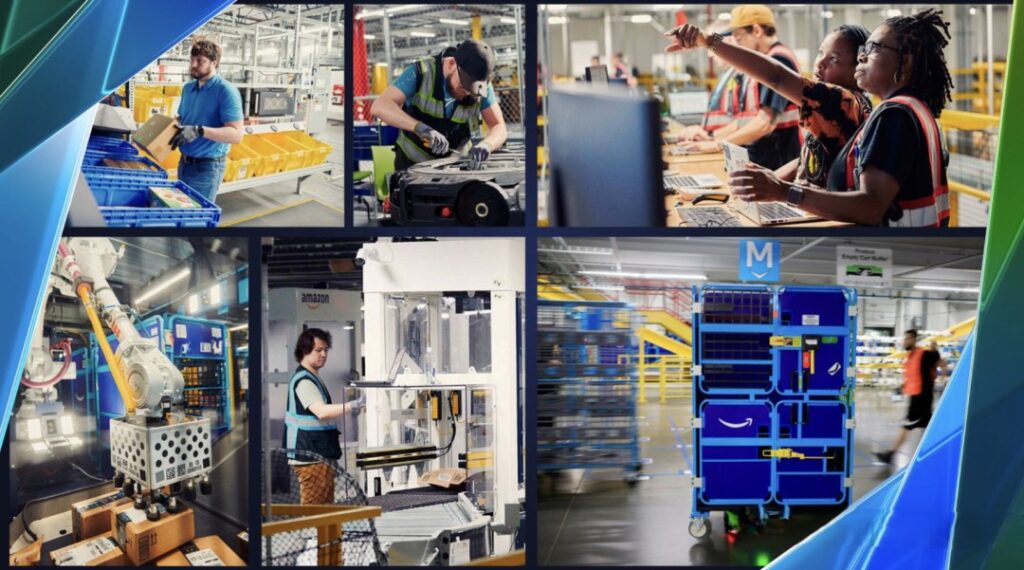
Amazon says robots like Vulcan are meant to make warehouse jobs safer. The company says these robots can take over tasks that are tiring, repetitive, or hard on the body. Reaching high shelves, bending low, lifting heavy things again and again—those jobs can wear people down.
I can imagine a worker at the end of a long shift. Their feet hurt. Their back is stiff. The warehouse lights are bright. The scanner beeps again. Another item. Another shelf. Another box.
If a robot can take the most painful part of that work, I get why some workers may welcome it.
But there is another side.
When machines get better, companies often need fewer people for the same amount of work. That is where the worry begins.
Amazon has said automation also creates new jobs, such as robot maintenance roles and system operation jobs. The company has also pointed to training programs that help workers move into technical roles.
So the question is not just, “Will robots take jobs?”
A better question may be: “Who gets the new jobs, and who gets left behind?”
Robots Are Quietly Changing the Job Map
This is where the story gets sharper.
Amazon still has a massive human workforce. Reports put its global employee count around 1.5 million people. But its hiring pattern has changed as warehouses become more automated.
The Wall Street Journal reported that Amazon had an average of about 670 workers per facility, the lowest level in 16 years. Other reports also noted that packages handled per worker rose sharply over time, from about 175 packages per worker in 2016 to around 3,870 in 2025.
That number made me read it twice.
One worker. Far more packages. Same company. More machines.
This does not mean every worker is doing the same job as before. Robots and AI are changing the whole system. Some tasks move from human hands to machine arms. Some workers shift into checking screens, fixing machines, or managing robot flow.
Still, the direction is clear: Amazon wants more speed with fewer slow points.
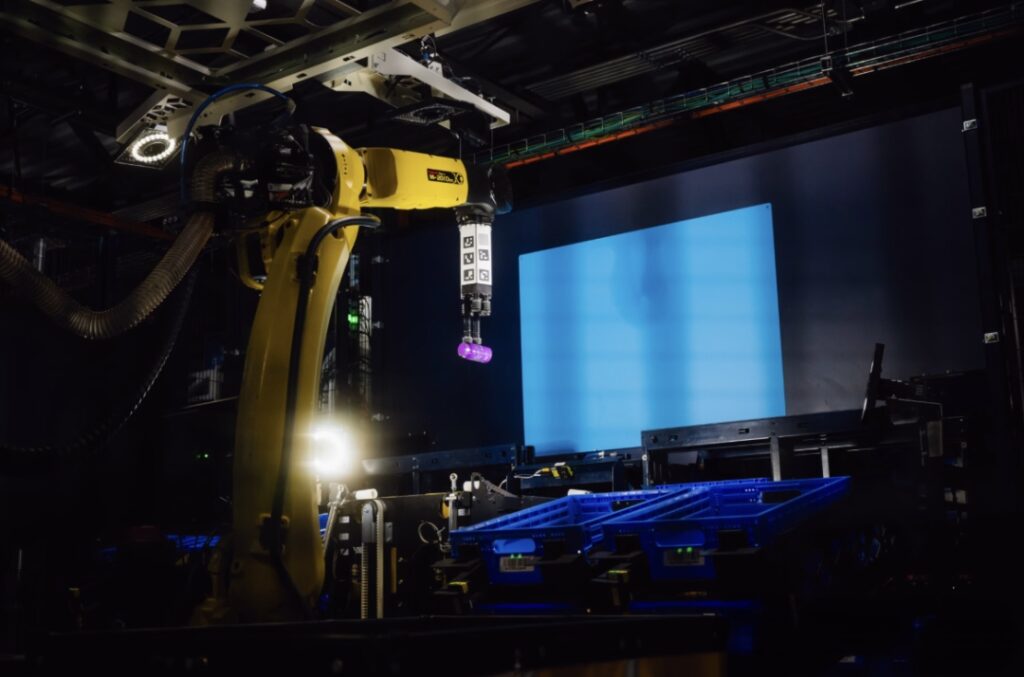
One of the biggest examples is Amazon’s next-generation fulfillment center in Shreveport, Louisiana. Reports say these newer sites use far more robotics, with robotic arms helping sort, stack, move, and package items. Amazon has said advanced fulfillment centers can move products about 25% faster than traditional ones.
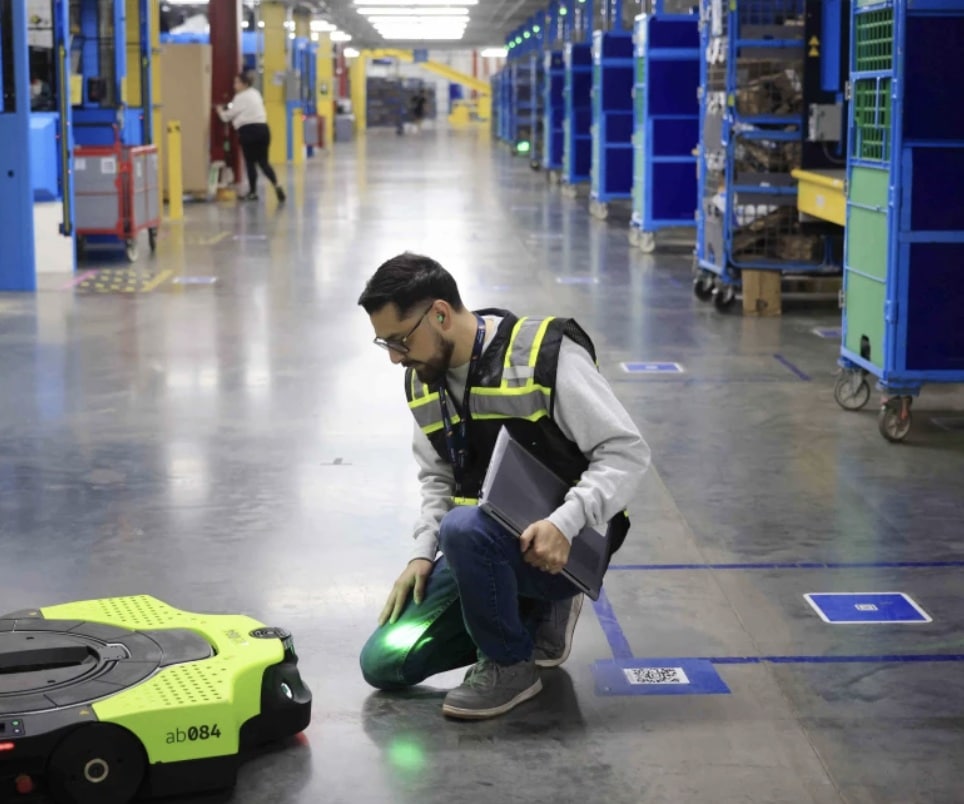
I picture that Shreveport warehouse as a giant machine with humans inside it.
A package rolls forward. A robotic arm lifts. A scanner flashes. A paper bag opens. A cart moves toward a truck door. Nobody shouts. The sound is more like a long mechanical whisper.
Fast? Yes.
Human? Less than before.
Amazon’s robot journey did not begin yesterday. In 2012, Amazon bought Kiva Systems for $775 million, a move that helped shape its warehouse robotics strategy. At first, many warehouse robots focused on moving shelves and heavy goods. Over time, they moved into harder jobs like sorting, picking, packing, and handling items in tighter spaces.
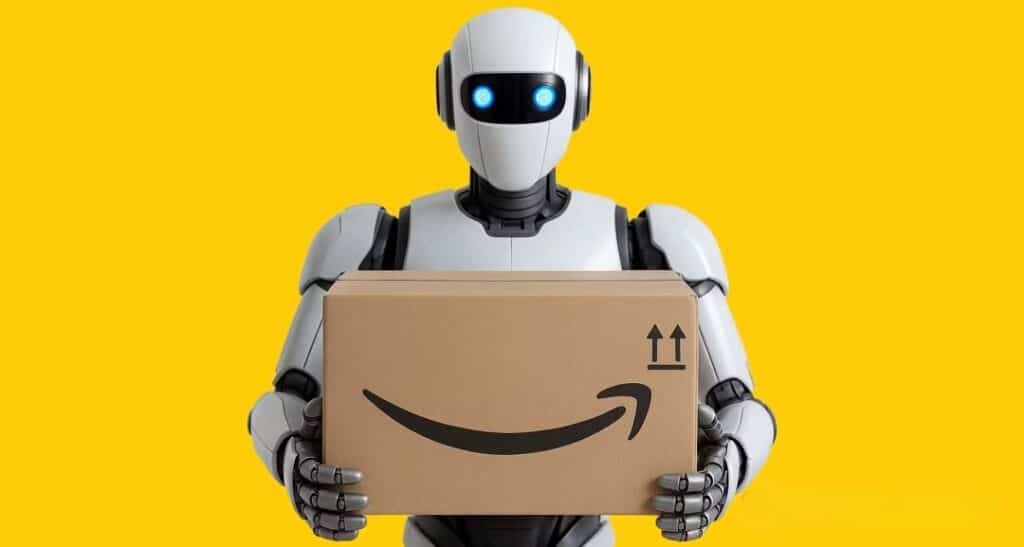
Now Amazon is even testing humanoid-style robots, including machines from Agility Robotics, though those are still in testing and not fully rolled out across warehouses.
For me, this is the important part: robots do not need to replace all workers to change the job market.
They only need to replace enough tasks.
A worker’s job is made of tasks. Pick this. Carry that. Scan this. Sort that. Check the system. Fix the jam.
When robots take more of those tasks, the human job changes. Sometimes it gets better. Sometimes it disappears. Sometimes it becomes a job that requires more training.
That is why this Amazon story matters far beyond Amazon.
Amazon’s 27,000 Job Cuts and the AI Question
The robot story also connects with a bigger AI story.
Amazon CEO Andy Jassy has said that generative AI will change the company’s workforce. In a public memo, he said some jobs would need fewer people as AI tools spread, while other kinds of jobs would grow. He also encouraged workers to learn AI and use it in their daily work.
That is a careful way to say something very serious.
Some jobs will shrink.
Amazon already cut more than 27,000 jobs in large layoffs during late 2022 and early 2023. Later reports said Amazon also announced another corporate cut of about 14,000 jobs in 2025 as part of a push to reduce layers and work more efficiently.
AI is not just writing emails or answering questions. At Amazon, it can help with coding, data work, inventory planning, demand prediction, robot movement, and warehouse flow.
That is powerful.
It also puts pressure on people.
I do not think the fair answer is “robots are bad.” That feels too easy. I also do not believe the happy slogan that every lost job will magically become a better one. That feels too neat.
The real picture is messier.
A robot can save a worker’s back. A robot can also reduce the need to hire another worker.
AI can remove boring tasks. AI can also make a team smaller.
A worker can learn new skills and earn more. Another worker may not get that chance.
That is the part we should not ignore.
Imagine a school cafeteria. At first, students carry trays, serve food, clean tables, and count lunches. Then machines arrive. One machine washes trays. One machine counts meals. One machine delivers food carts.
The cafeteria still needs people. But it may need fewer people doing the old jobs. It may need more people who can fix machines, manage systems, and solve problems when something breaks.
That is what is happening in warehouses.
So, are robots stealing jobs?
Sometimes, yes.
Are robots also making some jobs safer and creating new ones?
Also yes.
The hardest truth is that both things can happen at the same time.
When I look at Amazon’s 1 million robots, I do not see a simple “humans versus machines” fight. I see a warning sign and an invitation.
The warning sign says: repetitive work is easier to automate than many people think.
The invitation says: learn the tools early. Learn how robots move. Learn how AI makes decisions. Learn how machines fail, because humans will still be needed when they do.
That may be the next big job skill.
Not beating the robot.
Working with it—and knowing what to do when it gets stuck.
 Robotics in Warehouse Automation: Trends to Watch
 Understanding robotic surgery
 How Medical Robots and Humanoids are Quietly Rewriting Care
 The Rise of Hospitality Robots in the Industry