
Lumos Robotics Raises Total Funding Near $140M
Lumos Robotics has raised nearly RMB 1 billion after two new rounds led by Mitsubishi Electric, pushing its factory-focused embodied AI robots toward wider industrial use.
Table of Contents

Lumos Robotics has completed two new funding rounds, A1 and A2, bringing its total funding to nearly RMB 1 billion, or about $140 million. The company focuses on robots for factories and logistics sites, where machines must do real work, not just look impressive in videos.
The A1 round was led by Mitsubishi Electric Intelligent Manufacturing Technology (China). Existing investors, including Puhua Capital and Wuzhong Financial Holdings, also joined. The A2 round was again led by Mitsubishi Electric, with Hang Seng Electronics, Haigao Group, and Kunshi Investment taking part.
According to information reviewed by AX Robots, the new capital will support three goals: building larger embodied AI models, expanding into more business scenes, and speeding up large-scale industrial use.
A Factory-First Bet on Embodied AI
Lumos Robotics was founded with a clear idea: robots should learn by working in the physical world.
Its founder, Yu Chao, has argued that embodied AI cannot stay only in labs or demo videos. It needs to “do real work” and create value for customers.
That explains the company’s focus on industrial use. Consumer robots still face many hard questions, from cost to safety to daily need. Factories, warehouses, and production lines offer a clearer path.
In these places, a robot can be judged by simple facts:
| Question | Why It Matters |
|---|---|
| Can it pick the right part? | Accuracy saves time. |
| Can it work safely near people? | Safety is basic. |
| Can it reduce labor pressure? | Factories need stable output. |
| Can it pay for itself? | Buyers care about return on investment. |
Lumos has built its own physical AI engine, called Lumos Nexcore. The system is designed to help robots understand objects, plan actions, and adapt to busy factory scenes.
The company is also working on data collection without relying only on finished robot bodies. This may help it gather more training data faster, then improve its models step by step.
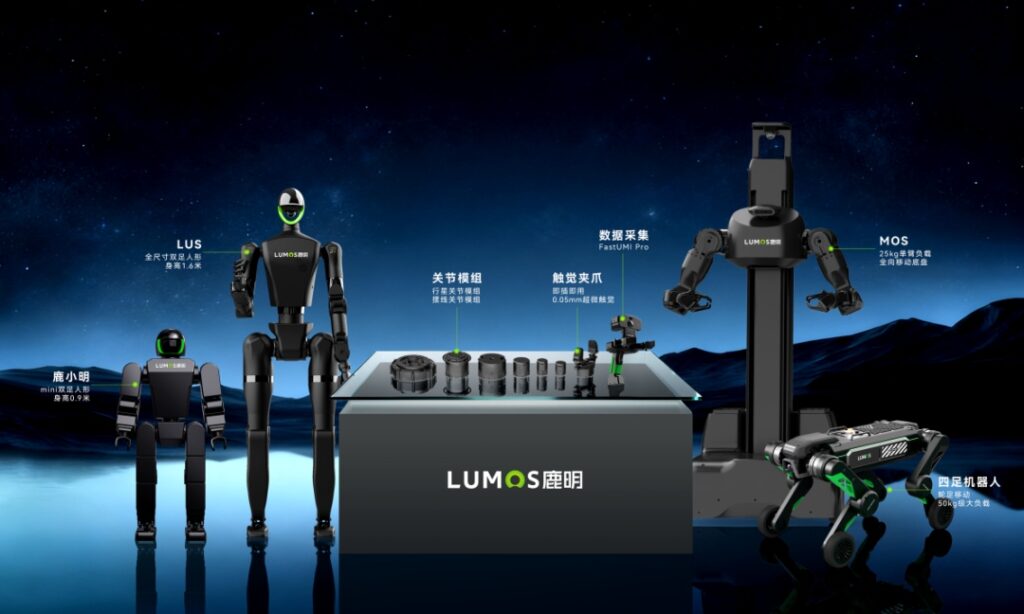
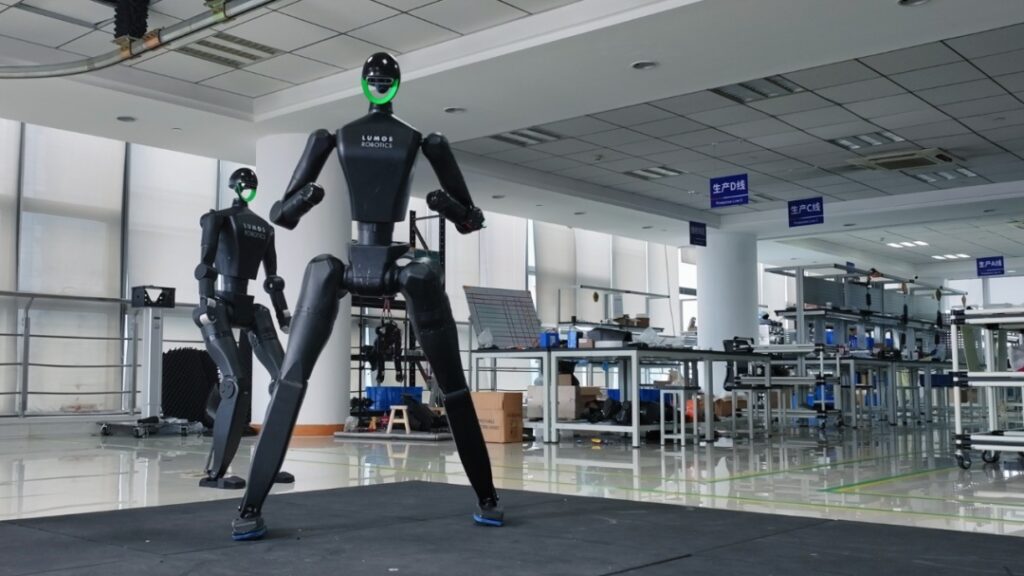
On the hardware side, Lumos has developed products such as LUS, a full-size humanoid robot, and MOS, a heavy-duty wheeled robot with arms. The goal is not just movement. It is useful movement.
Mitsubishi Electric Doubles Down
Mitsubishi Electric’s role is important because it is not just a financial investor.
The Japanese company is a major name in industrial automation. In fiscal 2025, Mitsubishi Electric reported revenue of ¥5.52 trillion and operating profit of ¥391.8 billion. Its results noted pressure in factory automation, showing why new automation technologies are becoming more important.
The company also ranked No. 439 on the 2025 Fortune Global 500 list, with revenue of about $36.2 billion.
For Lumos, Mitsubishi Electric brings something money alone cannot buy: factory knowledge, automation tools, and real production sites.
The two sides have already set up joint labs in Suzhou and Shanghai, according to the provided company information. Their work focuses on hard problems such as high-precision motion control and multi-robot teamwork.
One test case is especially telling. At a Mitsubishi Electric PLC production line, Lumos’ MOS robot is being used for flexible visual inspection. The robot can identify products, pick them up, and check several sides for surface defects.
That is not a flashy stage demo. It is factory work.
Why Investors Care Now
Embodied AI is becoming one of the most watched areas in robotics.
The idea is simple to explain but hard to build: give AI a body, then let it sense, move, and act in the real world.
In 2025, many companies proved that robots could perform more complex tasks. In 2026, the harder test is scale. Can these robots be built, sold, installed, and maintained at a cost that makes sense?
Investors are now looking for teams with real customers and real orders. A clever model is no longer enough.
That shift may help companies like Lumos. Its pitch is tied closely to factories, logistics, and industrial partners. These are places where buyers already know what pain points they want solved.
AX Robots sees this as part of a larger change in robotics: the winners may not be the robots that look the most human. They may be the ones that do the most useful work, again and again.
The Next Test: From One Factory to Many
Lumos still faces big challenges.
A robot that works well on one production line may struggle in another. Lighting changes. Parts change. Workers move in different ways. Even a small change in layout can confuse a robot.
That is why data matters so much. Each real task can teach the model something new. Over time, those lessons may help robots move from simple picking to tool use, inspection, loading, sorting, and more.
The bigger question is whether Lumos can turn early projects into repeatable products.
If it can, its new funding may become more than a headline. It could help the company move from promising technology to a larger industrial robot business.
For now, one point is clear: Lumos Robotics is betting that embodied AI will grow first where the work is concrete, the value is measurable, and the robot has a job to do.
 Humanoid Robots Move Into Real Business
 Humanoid Robots: China’s Policy Roadmap
 War Robots Appear on the Ukraine Front
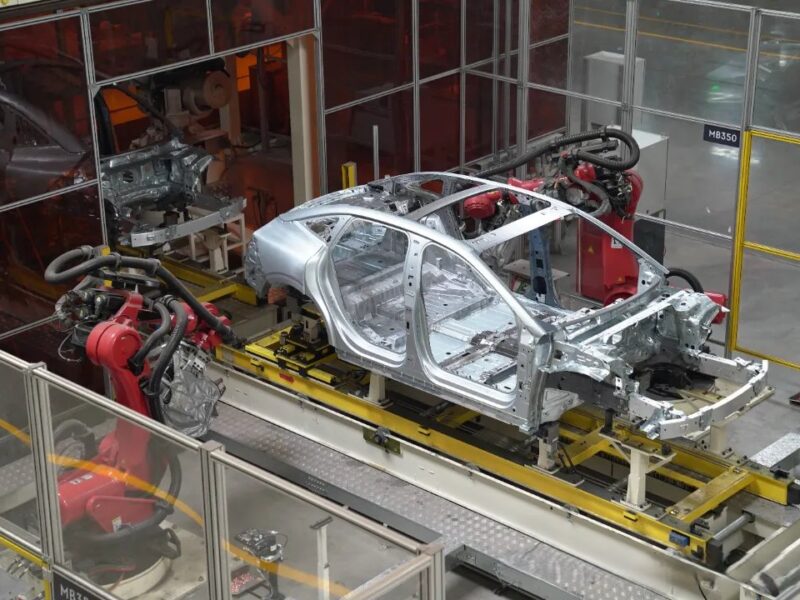 China’s Welding Robots Enter Top Auto Factories