
China’s Welding Robots Enter Top Auto Factories
Chinese welding robots from Siasun have entered Geely’s auto lines, showing stronger local robot technology in high-end car manufacturing.
Table of Contents
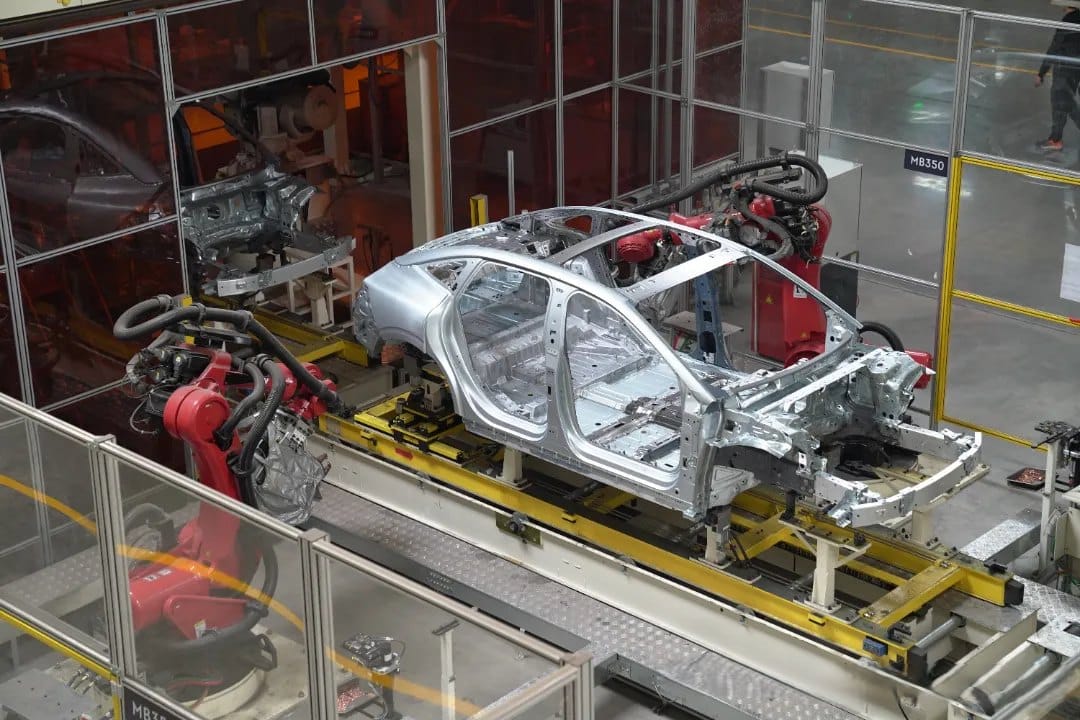
Siasun Robots Start Work at Geely Super Factory
A new group of Chinese welding robots has moved into one of the toughest places in manufacturing: the car body shop.
On April 21, China’s State Council Information Office held a briefing on the country’s industrial and information technology development in the first quarter of 2026. One point stood out: China is pushing harder into high-end, smart manufacturing, including the first batch use of domestic spot-welding industrial robots on auto welding lines.
According to the materials provided, about 100 Siasun spot-welding robots have entered automated welding lines for several Geely Auto brands.
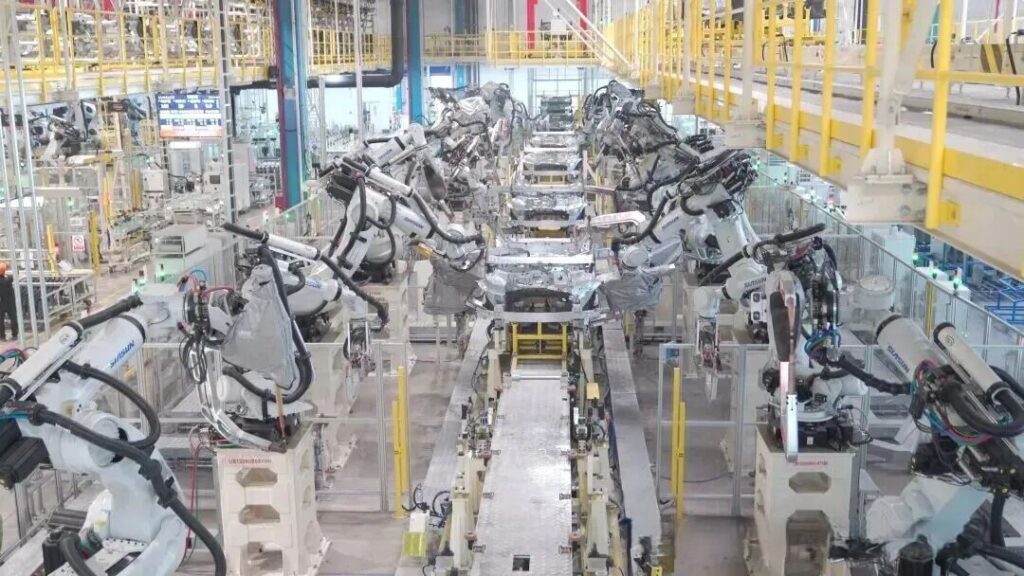
The robots include major 210 kg and 360 kg models. They help handle the full welding process, from single stamped parts entering the line to a complete body-in-white leaving the station.
For readers of AX Robots, this is more than a factory update. It is a sign that Chinese robot makers are entering a space long led by Japanese and European brands.
Car factories are hard to win.
A robot in this setting must move fast, stop safely, and repeat the same action thousands of times with very little error. If one machine fails, the whole line can slow down.
That is why automakers care about long service life, stable control, strong arms, and fast maintenance.
GGII data cited in the materials says China’s industrial robot localization rate had passed 60% by the end of 2025. Yet domestic robots still had less than 10% penetration in complete vehicle factories.
That gap explains why the Geely deployment matters.
Chinese robots were already growing in many factory areas. But the main auto plant remained one of the hardest tests.
Siasun has been chasing this goal for years. In 2012, it sent 28 industrial robots into FAW Group’s welding workshop. Since then, it has worked with carmakers including FAW, NIO, Voyah, Wuling, BMW Brilliance, Changan, XPeng, and Chery, according to the provided materials.
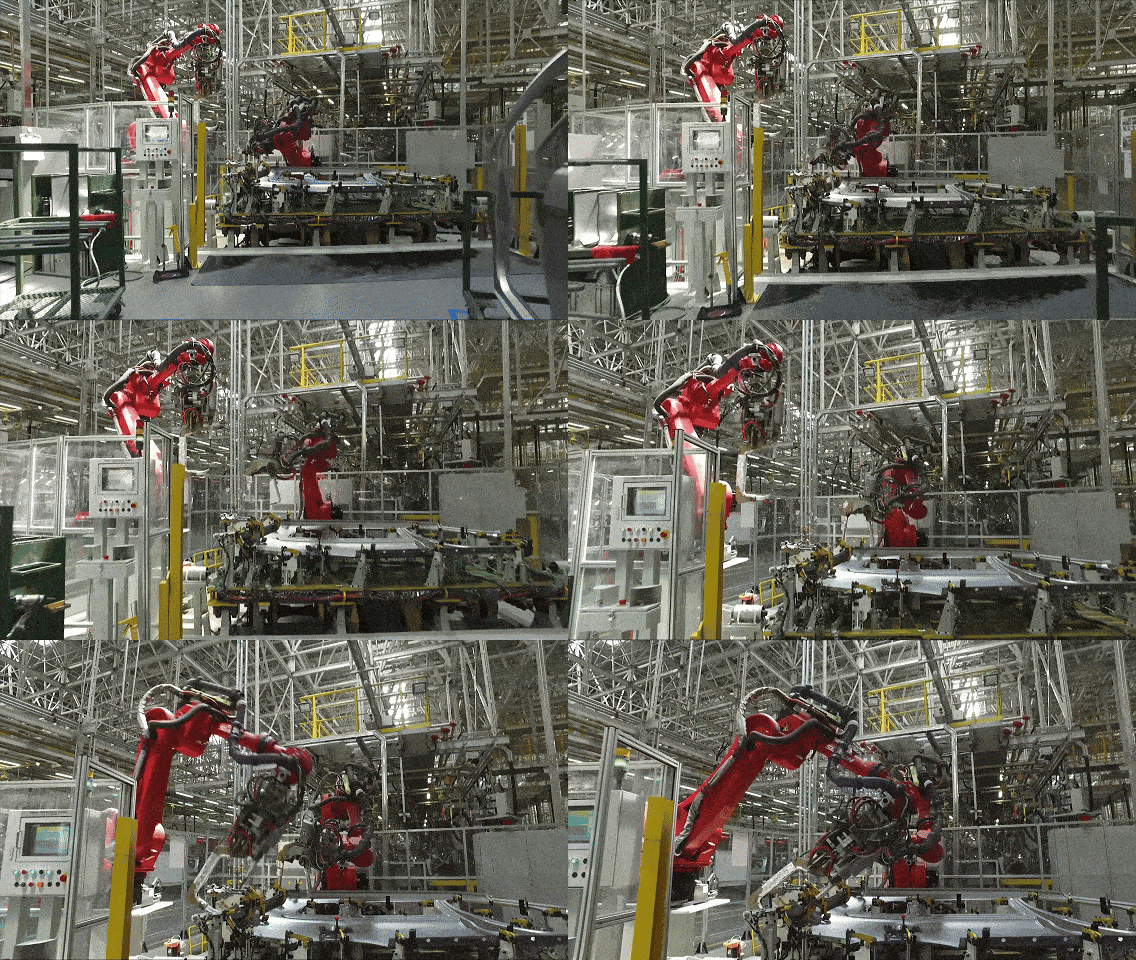
Why These Welding Robots Matter
Spot welding is a simple idea with a difficult job.
Two metal sheets are pressed together. Then heat and pressure join them at a small point. A car body can have 4,000 to 6,000 weld spots.
Each spot must be strong. Each one must land in the right place.
Siasun’s large-payload robots are built for this kind of work. The company’s 210 kg reach-down robot is designed for heavy-load jobs and deep spaces, including welding inside automobile bodies.
In a car plant, space is tight. Robot arms must reach around frames, panels, and tools. They also carry heavy welding guns.
That is why payload matters.
The provided materials say Siasun’s common spot-welding models cover 165 kg to 360 kg. This range fits many auto body shop needs.
Three Technologies Behind the Robots
Siasun’s system is built around three main areas:
| Area | What it does |
|---|---|
| Strong robot body | Keeps the arm stable under heavy load |
| Self-developed control system | Helps the robot move with speed and accuracy |
| AI maintenance network | Warns teams before small problems become big ones |
The robot body uses a high-rigidity cast structure and optimized motion design. This helps the arm stay accurate during fast, heavy work.
The company also uses digital twin testing. In simple terms, engineers test a virtual robot many times before changing the real design.
This helps them find weak points early.
The control system is another major part. Siasun says its software includes smart collision protection, vibration control, load detection, stiffness compensation, and dynamic feedforward control.
That sounds complex. The result is easier to understand: the robot can sense stress, stop quickly, and adjust when the welding gun load changes.
Then comes maintenance.
Instead of waiting for a robot to break, Siasun uses AI models to watch for early warning signs. These can include reducer wear or cable fatigue.
For a car factory, this matters. A planned repair is annoying. A surprise shutdown is expensive.
The Welding Process Is the Real Test
Hardware alone is not enough.
A welding robot also needs the right process data. Pressure, stroke, welding gun settings, air movement, gaps, and timing all affect the final weld.
Siasun’s process package turns expert welding experience into standard settings that can be used again and again.
That helps each weld spot stay consistent.
In a body shop, “almost right” is not good enough. A weak weld can create safety risks. A missed weld can stop inspection. A slow robot can hold back the whole line.
This is where domestic robots must prove they can do more than move.
They must understand the job.
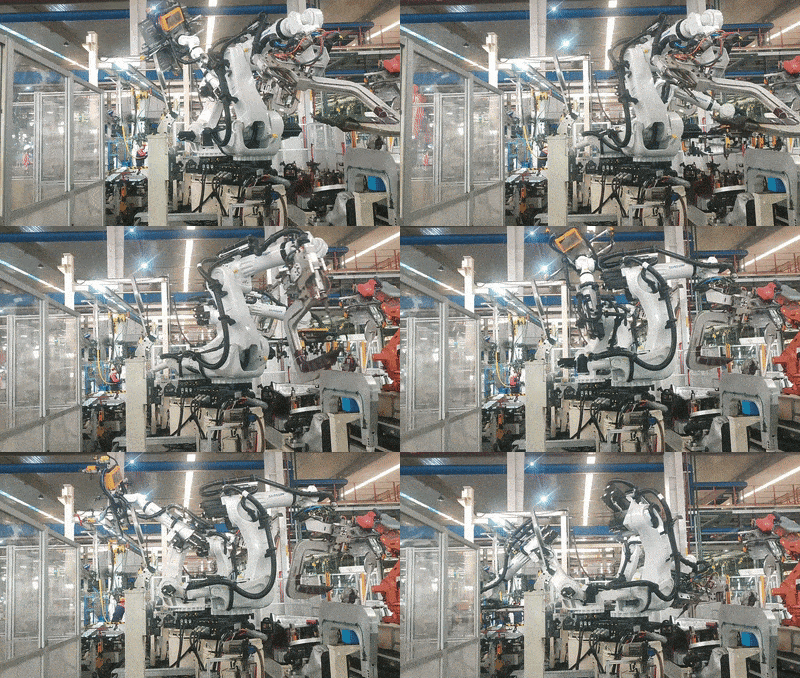
A Bigger Shift in Chinese Manufacturing
The Geely project is not just about spot welding.
According to the provided materials, Siasun has also built mature applications in arc welding, gluing, grinding, assembly, SPR riveting, and heavy-duty AGVs.
That gives the company a wider role across auto production.
It also shows a change in China’s robot market. Domestic brands are no longer fighting only on price. They are trying to win in the most demanding factory scenes.
The next target is heavier robots.
Siasun plans to develop 420 kg to 600 kg heavy-duty models. These could support new auto processes such as large integrated die-cast parts and big battery packs.
For AX Robots readers, the message is clear: the body shop is becoming a new proving ground.
If Chinese welding robots can stay stable there, the next question will not be whether they can enter high-end factories.
It will be how fast they can scale.
 Lumos Robotics Raises Total Funding Near $140M
 China Mobile Unveils Lingxi Robot Family
 Humanoid Robots Move Into Real Business
 Humanoid Robots: China’s Policy Roadmap