
11M U.S. Homes Fuel the Rise of Pool Robot Pioneer
As robot vacuum cleaners have reached peak saturation, new application scenarios—such as lawn mowing, window cleaning, and pool cleaning—are stepping in as the next wave of global expansion stories. Recently, Fairland has submitted its listing application to t...
Table of Contents
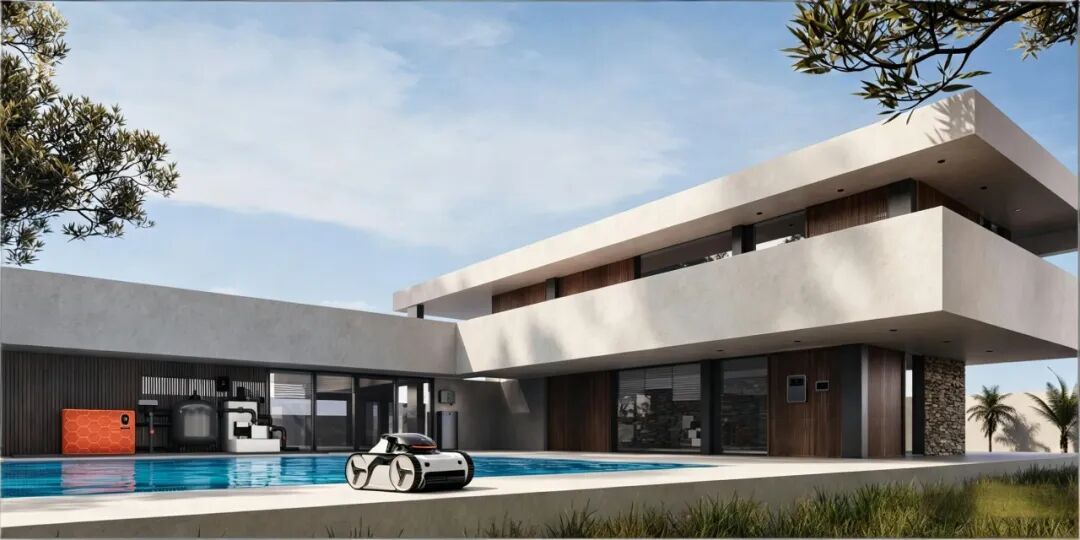
As robot vacuum cleaners have reached peak saturation, new application scenarios—such as lawn mowing, window cleaning, and pool cleaning—are stepping in as the next wave of global expansion stories.
Recently, Fairland has submitted its listing application to the Hong Kong Stock Exchange’s main board. If all goes as planned, it could become the “first publicly listed pool robot company.”
However, for most Chinese consumers, “pool robots” remain a niche and unfamiliar concept.
After all, in typical Chinese households, visiting a swimming pool is not a frequent activity—let alone owning one or equipping it with a dedicated robot.
But in Europe and the United States, the term is far from obscure. In fact, its familiarity rivals that of robot vacuum cleaners in China.
A pool robot is essentially an “underwater vacuum cleaner.” It moves along the bottom, walls, and waterline of a pool, collecting debris such as leaves, sand, hair, and insects, brushing surfaces clean, and filtering waste through built-in systems.
Before such robots existed, pool maintenance required either hiring professionals to scrub and clean underwater or doing the labor manually—often in sweltering heat.
Because pool robots perform labor-intensive tasks, and because pool ownership is widespread in developed Western countries (with 10–11 million pool-owning households in the U.S. alone), this seemingly niche category has evolved into a high-growth, highly competitive global market.
Established international players like Dolphin and Fluidra have long dominated the market. Meanwhile, Chinese companies such as Wybot, Aiper, and Beatbot are rapidly gaining ground, particularly with cordless innovations.
Amid this wave, Fairland has positioned itself at the doorstep of the capital markets.
Yet there is an intriguing contrast in its IPO story:
While Fairland aims to present itself as a “pool robot pioneer,” its strongest business foundation is not in robotics.
From Pool Equipment Veteran to Robotics Aspirant
Though the name Fairland may not be widely recognized, it is far from a newcomer.
As early as 1999, founders Chen Bo and Jiang Hui identified the global pool equipment market as an opportunity. They began with pool heat pumps and established early production bases. In 2001, the FAIRLAND brand was officially launched.
In other words, long before “pool robots” became a buzzword in capital markets, Fairland had already spent over two decades in the pool equipment industry.
Initially, its focus was not on cleaning robots, but on foundational products such as heat pumps and water pumps.
These products may lack the appeal of robotics, but they are indispensable components of pool systems. Heat pumps regulate temperature, water pumps enable circulation and filtration, and treatment systems maintain water quality. For private pools, hotels, and resorts, these are mission-critical.
By 2024 revenue, Fairland ranked first among China’s intelligent pool heat pump and water pump manufacturers, with global market shares of 15.0% and 6.6%, respectively.
Today, Fairland’s product portfolio includes three categories: intelligent pool equipment, intelligent lawn equipment, and others. Within pool equipment, it further divides into energy management, robotics, and water treatment systems.
Energy management primarily includes heat pumps and water pumps; robotics includes pool cleaning robots and related devices; lawn equipment focuses on robotic mowers targeting broader yard scenarios.
According to its prospectus, Fairland’s proprietary Full-Inverter technology allows pool heat pumps to achieve a coefficient of performance (COP) of up to 30—far exceeding the industry average of 3 to 6. Simply put, this means higher energy efficiency and more precise temperature control.
Its TurboSilence technology further reduces operational noise to around 45 decibels through optimized airflow design, low-noise turbine fans, and vibration-dampening materials—addressing the common trade-off between efficiency and noise.
These technological advantages align well with high-end residential, villa, and resort markets, where stable temperature control and low noise are both essential.
Such premium features have helped Fairland win over overseas customers.
Overseas Markets Drive Over 90% of Revenue
A counterintuitive reality is that private pools—often associated with luxury in China—are quite common abroad.
As mentioned earlier, over 10 million U.S. households own pools, representing an 8% penetration rate. In Australia, one of the world’s highest-penetration markets, there are about 3 million residential pools—roughly one for every 7–8 households.
Globally, the total number of pools exceeded 32.9 million in 2024, making it a mature, large-scale market. For many Western families, a pool is simply part of the home and backyard lifestyle.
As a result, Fairland derives about 99% of its revenue from overseas markets, particularly Europe, North America, and Oceania.
Yet while pools represent leisure, maintaining them is labor-intensive.
Water must circulate, temperature must be controlled, debris must be removed, and cleanliness must be maintained. Private pools often require weekly cleaning during peak seasons, while commercial pools involve even higher costs per maintenance session.
According to LawnStarter, U.S. pool owners spend an average of $1,432 annually on maintenance, with each service costing over $100.
High maintenance frequency, expensive labor, and strong demand together create enormous growth potential for pool robots.
While they may not fully replace human labor, they significantly reduce the most frequent and tedious cleaning tasks.
For consumers, buying a robot once often makes more sense than repeatedly paying for services.
Data shows that pool cleaning robots have achieved a compound annual growth rate (CAGR) of 9.3% over the past five years—far exceeding the 4.7% growth rate of the broader smart home sector.
A joint white paper by Beatbot and IDC predicts global shipments will exceed 3.97 million units by 2029.
The Reality Behind the “First Stock” Narrative
Despite its origins in heat pumps and water pumps, Fairland is unlikely to ignore the pool robot opportunity.
On one hand, robotics offers a more compelling growth narrative. On the other, it aligns with consumer electronics trends, featuring upgrade cycles, brand premiums, and synergies with themes like “smart yards” and “robot globalization.”
However, transitioning from traditional equipment to robotics is not trivial.
Fairland’s confidence largely reflects a familiar Chinese playbook: strong technology and competitive pricing.
Early pool cleaners were mostly corded, with limitations in mobility and convenience. Cordless robots—similar to robot vacuums—have transformed the user experience.
This shift has opened the door for Chinese brands, which excel in product iteration and supply chain efficiency.
But does technological strength and pricing alone guarantee success?
Not quite.
The “pool robot” market, though niche-sounding, is already fiercely competitive.
While Fairland may be among the first to approach IPO status, its financials reveal a nuanced picture.
From 2023 to 2025, its revenue grew from RMB 488 million to RMB 1.017 billion, representing a CAGR of about 44%. Growth is strong.
However, the primary driver remains non-robotic products.
In 2025, intelligent pool equipment accounted for 98.2% of revenue, with energy management products contributing 80.9%. Pool robots accounted for only 10.2%, while water treatment systems contributed 7.1%.
This creates a key contradiction: despite entering the robotics space, Fairland is still fundamentally a pool HVAC equipment company.
By contrast, competitor Wybot positions itself as a global leader in pool cleaning robots, with robotics contributing 89% of revenue. Its gross margin reached 58% in 2024 and is expected to rise to 62.9% in 2025—exceptionally high for hardware manufacturing.
This indicates strong brand pricing power rather than reliance on low-cost competition.
A Crowded and Challenging Market
The race for the “first pool robot stock” is becoming increasingly competitive.
While Fairland may lead in listing timing, the true representative of the category will ultimately depend on revenue structure, profitability, and sustainable growth.
Offline distribution channels in Europe and the U.S. are mature and relatively closed. Large retailers like Home Depot and Lowe’s have high entry barriers, while specialty stores maintain long-term partnerships with established brands.
Switching to a direct-to-consumer (DTC) model introduces new challenges, including marketing, logistics, warehousing, returns, and after-sales service.
Moreover, the market is far from a blue ocean.
In 2024, the top five manufacturers accounted for about 80% of global shipments. Established players like Dolphin and Fluidra remain dominant, while Chinese companies such as Wybot, Aiper, Beatbot, and others are intensifying competition in the cordless segment.
Among them, Wybot may pose the greatest challenge to Fairland’s ambitions.
In the end, while Fairland has successfully positioned itself within the pool robotics wave, the outcome of the “first stock” race remains uncertain.
Being first to file may secure headlines—but true leadership will be determined by business fundamentals.
 Are the Robotic Window Cleaners Worth It?
 How Long Will Your Snow Blower Last?
 Robot Vacuum Cleaner History: Who Made the First Robot Vacuum
 How Does a Robot Lawn Mower Navigate Your Yard?