
Robotics Break Through at FAIR Plus 2026
In recent years, bionic soft robotics has become one of the most important frontiers in the robotics industry. At the ongoing FAIR Plus 2026 Robotics Industry Chain Conference, one impression stands out clearly: robots are evolving from machines that simply mo...
Table of Contents
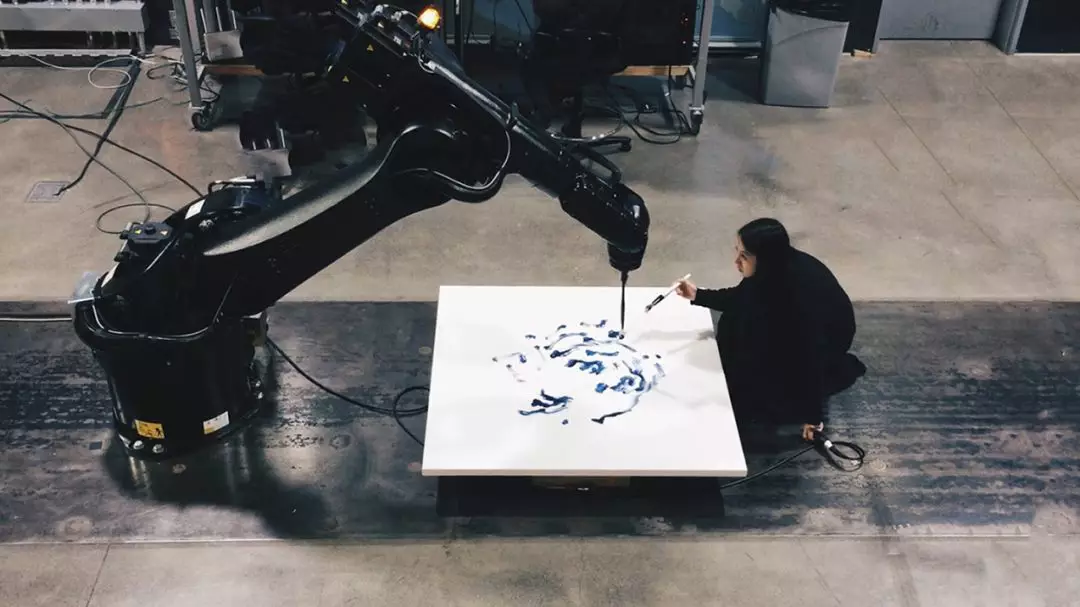
In recent years, bionic soft robotics has become one of the most important frontiers in the robotics industry. At the ongoing FAIR Plus 2026 Robotics Industry Chain Conference, one impression stands out clearly: robots are evolving from machines that simply move into systems that increasingly resemble humans.
This year’s exhibition is no longer dominated by joint motors, reducers, rigid movements, and fixed programs. Instead, two Chinese startups demonstrated two key breakthroughs in humanoid robotics: bionic muscles and electronic skin.
Disruptive Innovation: From Motors to Artificial Tendons
At the booth of Suzhou Zhixing Tendon, crowds gathered around a technology the company calls an “artificial tendon.” Rather than showcasing a traditional motor, the company presented a new actuation system inspired by human tendons.
“We are not a conventional motor company,” its representative repeatedly explained. “We use materials and drive technologies to mimic human tendons through system engineering.”
The component on display was only a few millimeters in size. Yet it can perform linear contraction and extension like human muscle. The smallest version measures just several millimeters, while its maximum output force reaches 50 newtons and its speed reaches 80 millimeters per second. Even more striking is its micrometer-level precision, with each step as small as 5 micrometers.
The real imagination lies in its applications. Because of its tiny size, the artificial tendon can be embedded into lifelike robotic faces, enabling 30 to 40 degrees of freedom and highly realistic micro-expressions. It can also be used in dexterous hands, where it can self-lock when powered off, allowing the hand to hold objects securely without consuming electricity.
“Our technology is originally developed in China, with no foreign experience to copy from,” the representative said. “It is the result of more than ten years of work by teams in Suzhou and Wuhan.” Currently, Zhixing Tendon’s artificial tendons are mainly targeting AI toys, lifelike robotic faces, and robotic hands.
The Soul of Dexterous Hands: Touch and Fine Manipulation
If artificial tendons are the robot’s “muscles,” then the technology brought by Linggan Robotics represents its “skin” and “nervous system.”
Headquartered in Shenzhen and spun out of the Hong Kong University of Science and Technology, the startup has a clear focus: building top-tier robotic tactile sensing components and robotic manipulation skill systems.
“This is a breakthrough year for tactile technology,” said founder Zhang Yazhan. “Last year, almost no companies were working on this. This year, suddenly many have appeared.”
Its core product is a vision-based tactile sensor that provides extremely dense tactile information, featuring high resolution, multimodal sensing, and multidimensional perception. At the exhibition, the sensor ran continuously all day without drift, jitter, or increased noise—evidence of the company’s strong algorithmic capabilities.
More importantly, Linggan Robotics is one of the few companies on the market capable of producing commercial-grade, fingertip-sized visual tactile sensors.
“Many customers encounter problems without realizing that what they lack is touch,” Zhang said. “Market education remains a challenge. We need to help customers understand that certain problems are actually caused by the absence of force and tactile sensing.”
Bringing fine manipulation into real-world use is equally difficult. Industrial production requires high efficiency, fast cycle times, and high precision. Current AI systems still face bottlenecks in real-time response and accuracy, while engineering optimization still demands extensive work.
Although Linggan Robotics had previously operated quietly under “underwater projects,” its first public appearance at the exhibition attracted significant attention from leading investment institutions and industry partners. The company has made clear that it will pursue a global strategy, supporting both Chinese robot manufacturers and overseas model companies.
A Turning Point for the Robotics Industry
FAIR Plus 2026 is not only showcasing frontier technologies from companies like Zhixing Tendon and Linggan Robotics. It is also presenting real-world applications that can be mass-produced, delivered, and deployed across industries.
Original innovation is only the starting point. Industrialization is the destination.
Bi Yalei, director of the Industrial Development Center at the Shenzhen Institute of Advanced Technology, Chinese Academy of Sciences, and executive vice chairman and secretary-general of the Shenzhen Robotics Association, said at the event: “The 500 exhibiting companies form a living white paper on Shenzhen’s robotics industry.”
In his view, the era of purely industrial robots has passed. As robotics expands into embodied intelligence, applications are landing across thousands of industries. This has helped Shenzhen’s robotics industry chain return to growth of more than 20% in 2025, officially entering a second explosive growth phase.
This growth is not empty rhetoric. The exhibition hosted 25 closed-door supply-demand matchmaking sessions covering manufacturing, logistics, healthcare, elderly care, retail, emergency response, and security. Major buyers such as FAW Group, CNOOC, and Shenzhen Metro released hundreds of real procurement needs on site. Technology suppliers and buyers negotiated one-on-one and finalized cooperation face to face.
When real supply-chain matching replaces empty PowerPoint presentations, and when signed orders become the exhibition’s biggest highlight, the direction of the industry becomes unmistakable.
Bi offered a more forward-looking judgment: “The era of traditional single-purpose industrial robots has ended. The comprehensive penetration of embodied intelligence across industries will be the largest source of industrial growth over the next decade.”
He also noted that Shenzhen is advancing the development of three national standards and two group standards, aiming to secure future leadership through standard-setting.
As the founder of Zhixing Tendon put it: “China has moved beyond the stage of imitation and entered a period of explosive original innovation.”
Linggan Robotics’ vision is simpler but equally ambitious: to make tactile sensing affordable and allow robots to enter ordinary households with true perception.
In 2026, leading humanoid robot makers are expected to achieve deliveries at the ten-thousand-unit level, while China’s dexterous hand market share is likely to continue leading globally. At this critical moment, FAIR Plus offers a unique window into the industry.
It is not merely an exhibition, but a mirror reflecting the full evolution of the robotics supply chain—from fragmentation to coordination, from technical validation to scaled delivery.
When 500 upstream and downstream companies complete the full loop of product selection, negotiation, and signing within one venue, the phrase “industrial hub” gains real weight.
And when people stop asking “What can robots do?” and begin asking “What can robots do for you?” the true transformation of China’s robotics industry has only just begun.
 What Robotics in Education Really Means for Today’s Kids
 What is a STEM Robot and Why is it Essential for Future Education?
 How to choose the best programmable robot: 2026 guide
 2026 Smart Robotics Industry Report