
China’s First Robot Traffic Police Team Starts Work on May 1
Hangzhou’s first robot traffic police team started work near West Lake on May 1, helping tourists find routes and reminding riders to follow traffic rules.
Table of Contents
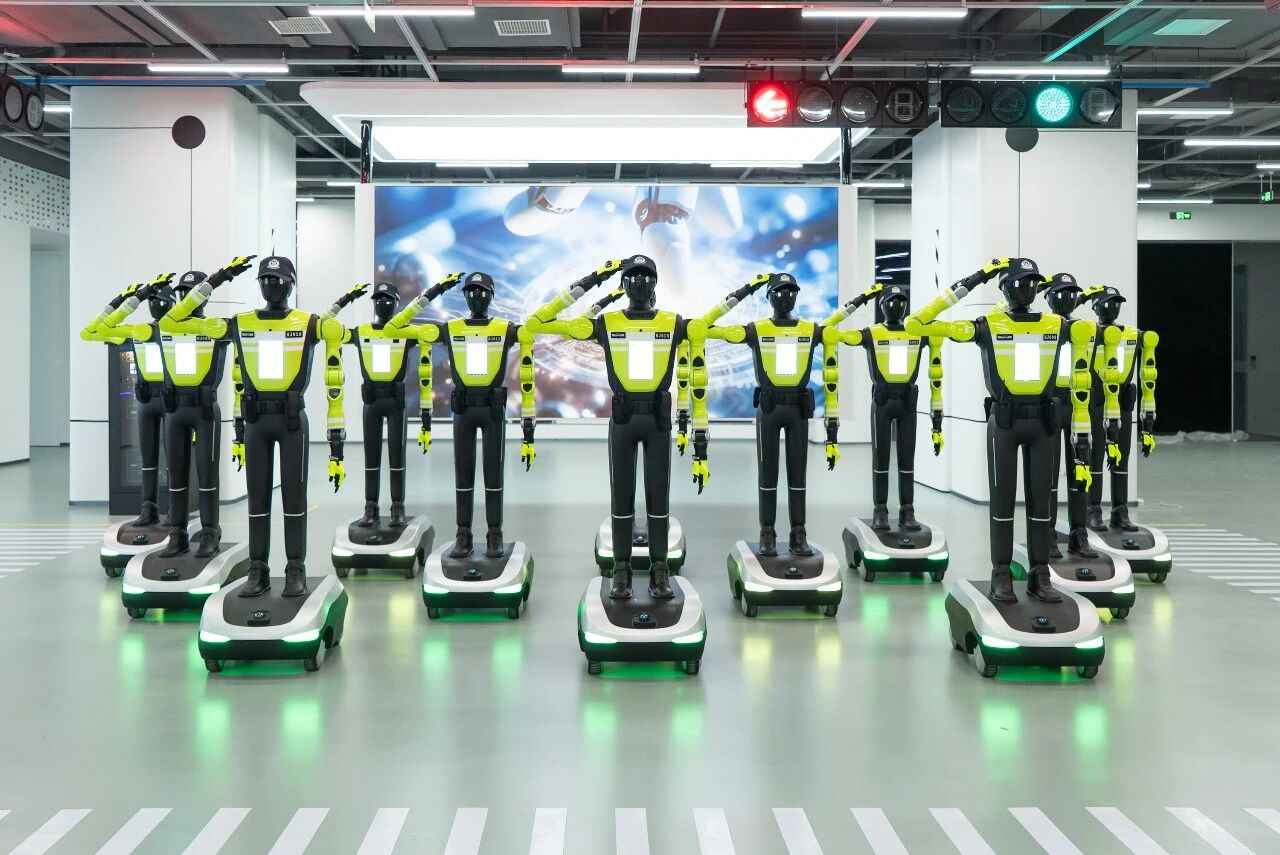
“Hangjing Zhixing” Makes Its Street Debut
I did not expect a robot to become the most watched “officer” near West Lake.
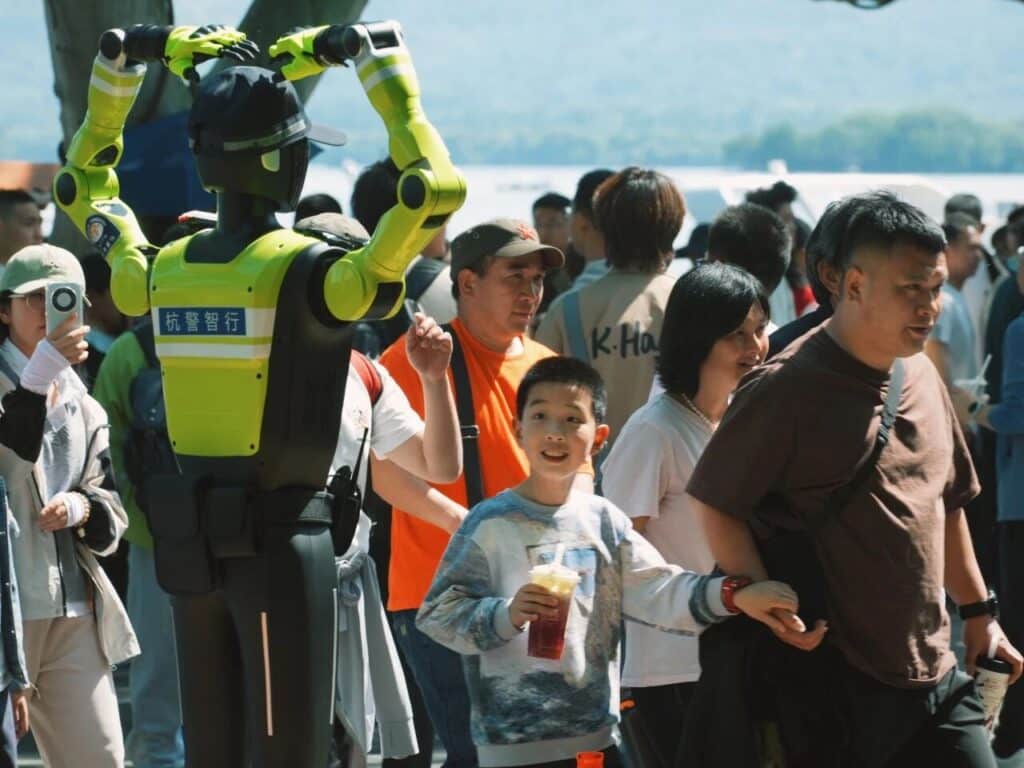
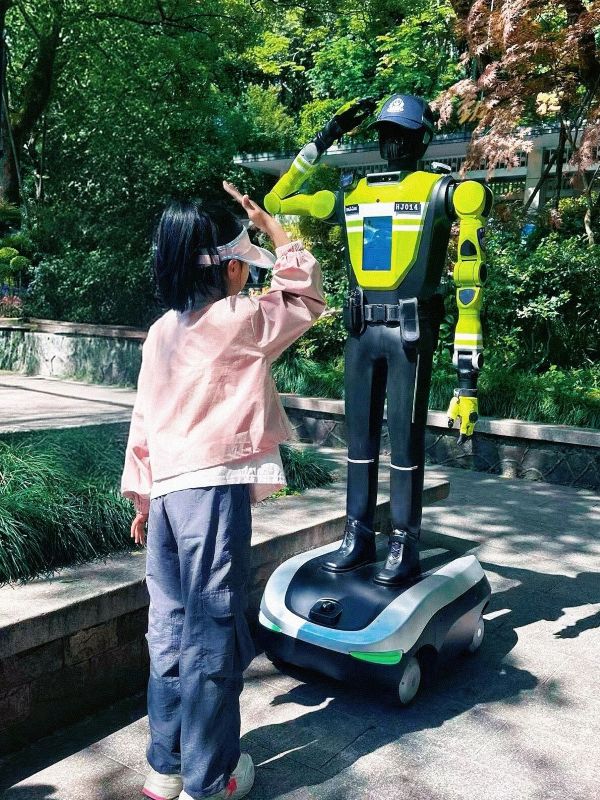
But on May 1, the first day of China’s Labor Day holiday, 15 smart traffic robots called “Hangjing Zhixing” officially started work in Hangzhou. They were placed around West Lake, the Hubin shopping area, and several busy roads.
This was China’s first organized traffic-management robot team.
At first, many people did not rush past them. They stopped, stared, and took out their phones. Some kids pointed at the robots. Some tourists walked closer, just to see what they could do.
For readers of AX Robots, this is a real robot story—not a lab test, not a showpiece, but robots working on real streets with real people.
Tourists Asked. The Robot Answered.
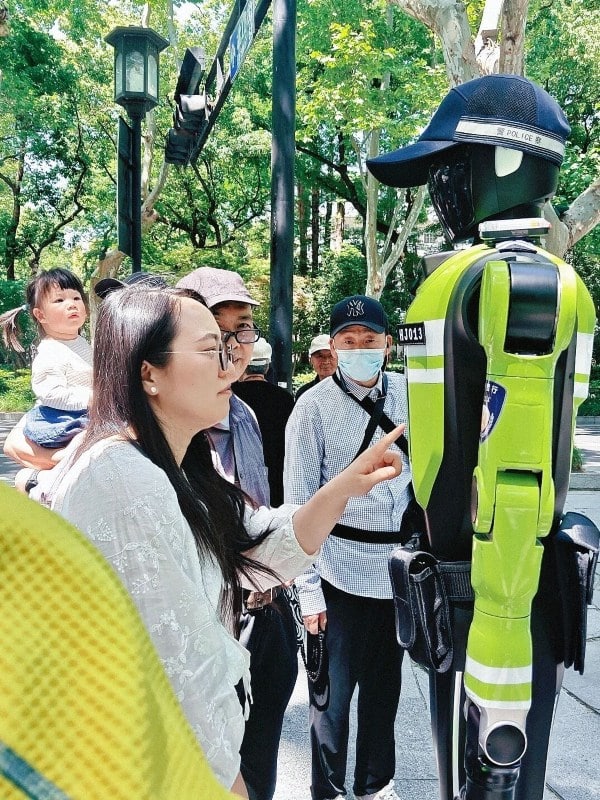
At about 8 a.m., near Shuguang Road and Baochu Road, a tourist walked up to one robot.
“I want to go to Exit C of Longxiangqiao Metro Station,” the visitor said.
The robot answered almost at once. It found the station, confirmed the location, and showed a route on its screen.
That small moment felt big.
Imagine the scene: West Lake on a holiday morning. Buses move slowly. Tour groups gather near the road. A child pulls at a parent’s sleeve. Someone is holding a map but still looks lost.
Then a robot gives directions in a calm voice.
One tourist was so surprised that they wanted to film it and show it to their child. Another person nearby said it was their first time seeing such a smart robot on the street.
I get it. Most of us have seen robots in videos. Seeing one answer questions beside a real crosswalk feels different!
During holidays, asking for directions is one of the most common needs around West Lake. These robots can answer voice questions and help people find routes to metro stations, scenic spots, and other places.
That saves time for human police officers. Instead of answering the same question again and again, they can focus on traffic safety and urgent problems.
A Polite Warning at the Crosswalk
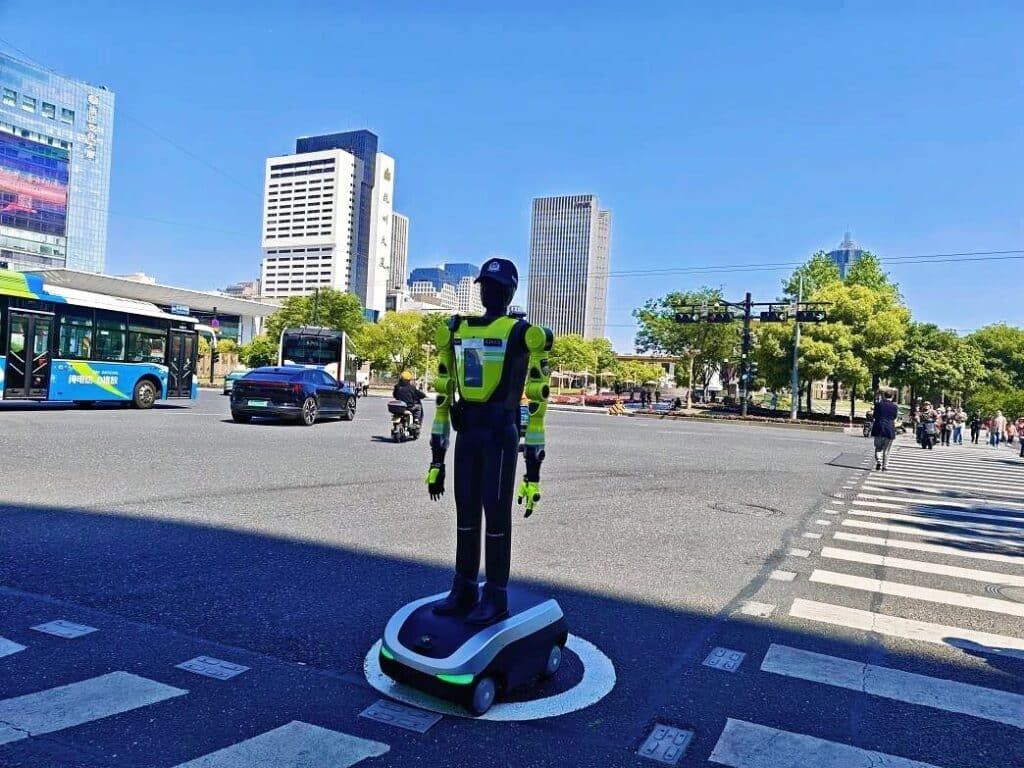
The robots also help at busy intersections.
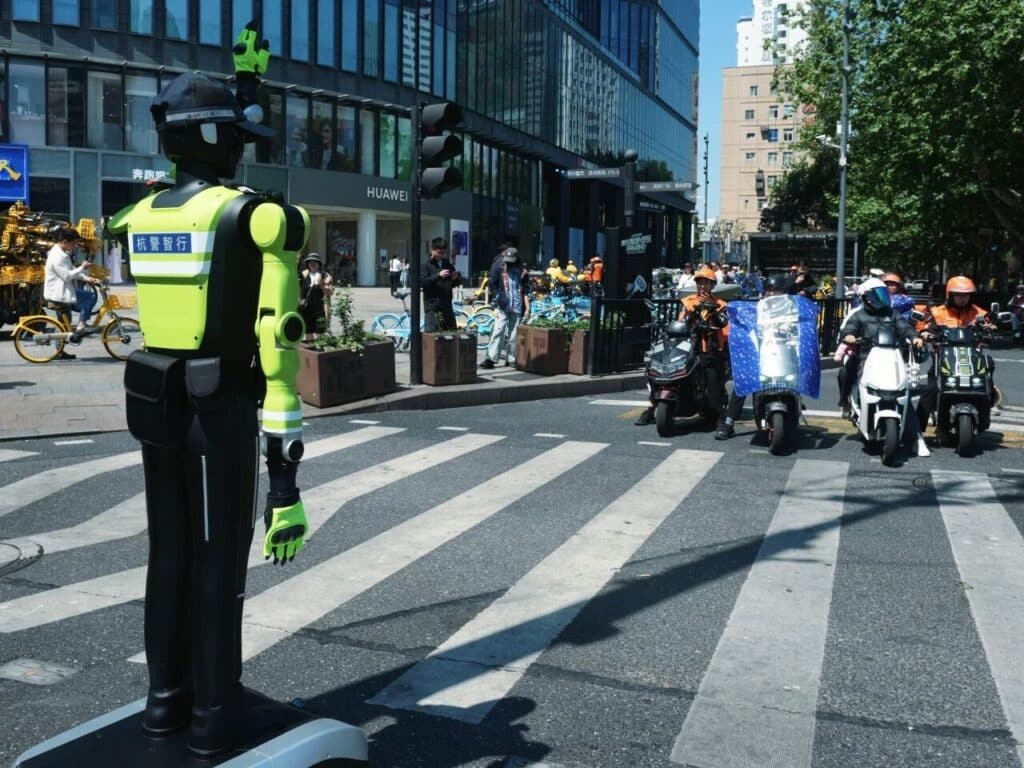
At one crossing, a person on an electric bike stopped too far forward. The wheel crossed the stop line.
Then the robot spoke:
“Comrade in white, you have stopped beyond the line. Please move back behind the stop line. Thank you.”
No shouting. No anger. Just a clear reminder.
The rider moved back.
People nearby also looked down at their own bikes and feet. Were they over the line too?
That scene says a lot.
When a human officer reminds someone, the person may feel nervous or embarrassed. But when a robot gives the warning, many people simply correct themselves.
The robot’s voice is calm. It does not sound angry. It does not argue. It just reminds.
What the Robots Do
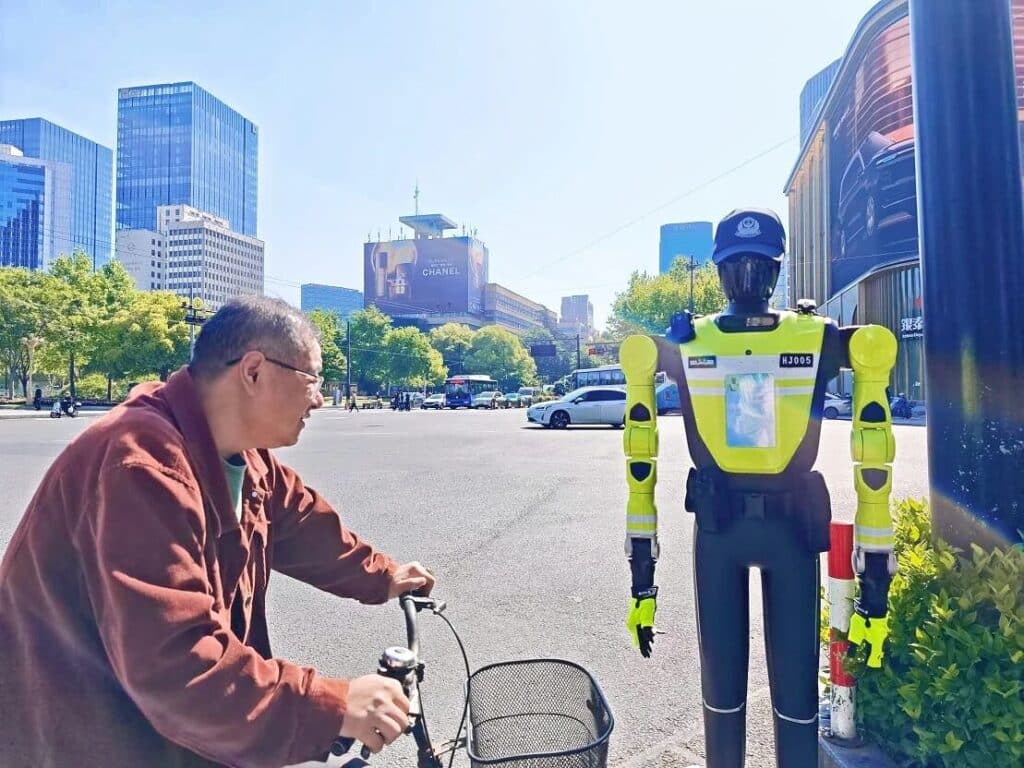
The “Hangjing Zhixing” robots have several jobs:
| Job | What It Means |
|---|---|
| Give directions | Help tourists find routes |
| Remind people | Ask riders and walkers to follow traffic rules |
| Guide traffic | Support police at busy crossings |
| Watch for risks | Notice unsafe road behavior |
| Send alerts | Upload information to a traffic center |
They do not replace police officers.
They act more like extra eyes, extra voices, and extra patience.
That matters in a place like West Lake during a holiday. One crossing can have tourists, buses, taxis, bikes, and private cars all moving at once. A human officer cannot watch every small action all day.
A robot can stand there for hours and repeat reminders without getting tired.
Boring? Maybe.
Useful? Yes.
Why This Feels Important
Some public robots in the past looked fun but did not do much. They were more like moving screens.
This case feels different.
These robots have clear jobs. They answer questions. They remind people. They help police cover more places. They work where help is actually needed.
That is why this story belongs on AX Robots. The best robots are not always the most dramatic ones. Sometimes, the most useful robot is the one that helps a lost tourist or stops a scooter from crossing the line.
Still, there are questions.
How accurate is the robot’s recognition? What data does it collect? What happens if it makes a mistake?
These questions matter. A street robot must be helpful, but it also needs to be trusted.
Trust comes from small moments: a correct answer, a polite warning, a clear screen, and a safe design.
The Future May Start at a Red Light
What stayed with me most was not the robot itself. It was how people reacted.
Some laughed.
Some filmed.
Some asked questions.
Some listened and moved back behind the line.
That tells me people may accept robots in public life when the job is simple, useful, and easy to understand.
Near West Lake, on a busy holiday morning, a robot stood beside human police officers and helped the street move better.
Was it perfect? Probably not.
Was it useful? It looked that way.
A tourist asked for a metro exit. A robot answered. A rider crossed the stop line. A robot gave a polite reminder. Around them, the city kept moving.
Maybe this is how the robot future begins.
Not with a big movie-style entrance.
Just a calm voice at a crosswalk saying, “Please move back behind the stop line. Thank you.”
 Humanoid Robots Move Into Real Business
 Humanoid Robots: China’s Policy Roadmap
 Lumos Robotics Raises Total Funding Near $140M
 War Robots Appear on the Ukraine Front